
Toyota did something with America’s best-selling car that no rival has dared: it deleted the gas engine. Every 2026 Toyota Camry on our lot is a hybrid — no V6, no gas-only four-cylinder, no separate badge to hunt for. Shoppers did not blink. The all-hybrid Camry moved 316,185 units in its first full year, up about 2% over the last model year a gasoline version existed, which is the clearest possible answer to whether the hybrid outsells the gas car.
So the Toyota Camry Hybrid MPG question is now the first one nearly every buyer asks, and the answer is the best in the nameplate’s 43-year history: up to 52 city, 49 highway and 51 combined on the LE with front-wheel drive. Below we break down fuel economy grade by grade, what all-wheel drive actually costs you at the pump, what each trim runs, and how the sedan holds up through a Kosciusko County winter. Compare grades in person at our Toyota dealership in Indiana, dig into the hardware on our 2026 Toyota Camry specs page, or see where it sits among the rest of the Toyota hybrid models.
The short answer: The 2026 Camry is hybrid-only across all five grades — LE, SE, Nightshade Edition, XLE and XSE. The LE with front-wheel drive is EPA-rated at 52 city / 49 highway / 51 combined MPG, every other configuration lands between 43 and 50 MPG combined, and electronic on-demand all-wheel drive is a $1,525 option on every trim. Hunting a specific grade and color? Our Toyota vehicle finder service will track one down.
51 MPG Combined
EPA-estimated on the LE with front-wheel drive
225–232 Horsepower
2.5L four-cylinder, fifth-generation Toyota Hybrid System
AWD on Every Grade
Electronic on-demand all-wheel drive for about $1,525
Why Every 2026 Camry Is Now a Hybrid
The Camry has topped U.S. passenger-car sales for more than two decades, so removing its gasoline engine was not a casual decision. It worked for two reasons: the hybrid had already become the version customers were choosing, and the current car is quicker than the gas four-cylinder it replaced. Buyers gave up nothing to gain 15-plus MPG.
Toyota Retired the Engine, Not the Nameplate
Through 2024, a Camry shopper faced a fork in the road — gas or hybrid, with a price premium attached to the efficient one. Toyota collapsed that choice into a single car and priced it below where the old Camry Hybrid started. For 2026 the structure carries over with a fifth grade added to the lineup. The practical effect is that nobody has to talk themselves into a hybrid anymore; it is simply how a Camry comes. Our broader Toyota Camry overview covers the nameplate’s longer arc if you want that context.
A Hybrid System That Never Needs a Plug
The Camry pairs a 2.5-liter four-cylinder with the fifth-generation Toyota Hybrid System for 225 net-combined horsepower in front-drive form and 232 with all-wheel drive, plus 163 lb-ft of torque through an electronically controlled continuously variable transmission. This is a full hybrid, not a plug-in: the lithium-ion battery refills through regenerative braking and engine load, so there is no cable, no wall box and no charging stop to schedule. At parking-lot speeds the car frequently runs on electricity alone, which is exactly where a conventional sedan wastes the most fuel. If the formats still blur together, our explainer on hybrid, plug-in hybrid and electric vehicles sorts them out.
What Is New for the 2026 Model Year
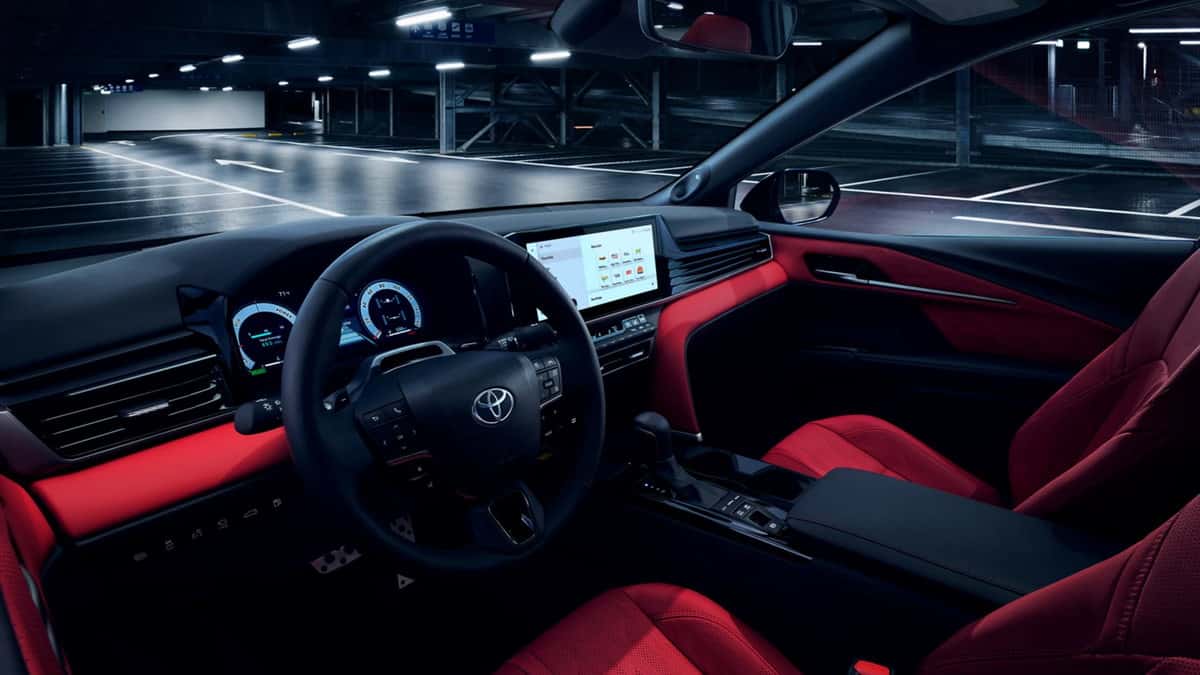
The headline addition is the Nightshade Edition, slotted between SE and XLE with gloss-black badging, a blacked-out grille, dark mirror caps and unique 19-inch wheels, offered in Ice Cap, Supersonic Red and Midnight Black Metallic. A new hazy blue paint called Dark Cosmos joins the palette on SE, XLE and XSE. Everything else worth knowing is standard: Toyota Safety Sense 3.0 on every grade, an 8-inch touchscreen with wireless Apple CarPlay and Android Auto, a 7-inch digital gauge cluster on LE, SE and Nightshade, and a 12.3-inch cluster plus 12.3-inch touchscreen on XLE and XSE. A 10-inch head-up display is available on the top two grades.
| Feature Category | Specification | Why It Matters |
|---|---|---|
| Powertrain | 2.5L Four-Cylinder Hybrid with eCVT | Fifth-generation hybrid system, zero charging required |
| System Output | 225 hp FWD / 232 hp AWD, 163 lb-ft | Quicker than the four-cylinder gas Camry it replaced |
| Drivetrain | Front-Wheel Drive Standard, AWD on All Five Grades | Rear electric motor adds traction with no driveshaft |
| Safety | Toyota Safety Sense 3.0 Standard | Full driver-assist suite on the base LE, no package needed |
| Technology | 8-in. Touchscreen Standard, 12.3-in. Available | Wireless Apple CarPlay and Android Auto across the lineup |
2026 Camry Hybrid MPG, Trims and Pricing
Five grades, front-wheel drive standard, all-wheel drive optional on every one of them. Fuel economy moves with the trim you pick, and the spread is wider than most shoppers expect — eight MPG combined separates the thriftiest Camry from the thirstiest.
Why the LE Is the Mileage Leader
The LE rides on 17-inch wheels with low-rolling-resistance tires and skips the sport suspension tuning, and that is worth five MPG combined against the SE, Nightshade and XLE. With a 13.2-gallon tank and a 51-MPG combined rating, an LE realistically clears 650 miles between fill-ups — a Warsaw-to-Indianapolis round trip with range to spare. The XSE with all-wheel drive sits at the other end of the range at 43 MPG combined, still strong for a 232-horsepower sedan with winter traction built in.
Full EPA Fuel Economy Chart by Grade
Here is every 2026 Camry configuration and its EPA rating. Note that all-wheel drive is a one-MPG penalty on the LE but a three-MPG hit on the XSE.
| Trim Level | Drivetrain | EPA City / Highway | Combined MPG |
|---|---|---|---|
| LE | FWD | 52 / 49 | 51 MPG |
| LE | AWD | 50 / 49 | 50 MPG |
| SE | FWD | 47 / 45 | 46 MPG |
| SE | AWD | 46 / 46 | 46 MPG |
| Nightshade Edition | FWD | 47 / 45 | 46 MPG |
| XLE | FWD | 47 / 45 | 46 MPG |
| XLE | AWD | 46 / 46 | 46 MPG |
| XSE | FWD | 47 / 45 | 46 MPG |
| XSE | AWD | 43 / 43 | 43 MPG |
Starting MSRP runs from roughly $29,000 for the LE with front-wheel drive to about $35,200 for the XSE, with the SE near $31,300, the Nightshade Edition near $32,300 and the XLE near $34,000. Add about $1,525 for all-wheel drive and a $1,195 delivery, processing and handling fee. Incentives shift monthly, so check our current monthly specials for what is actually live right now.
Shopping a Used Camry Hybrid Instead
The 2025 model year was the first hybrid-only Camry and is mechanically the same car as a 2026 minus the Nightshade Edition, which makes a one-year-old example the value sweet spot. Go back further and you are looking at the 2018–2024 Camry Hybrid: 208 combined horsepower, front-wheel drive only, and an LE grade rated as high as 52 MPG combined. Those hold up remarkably well. Browse our used Camry inventory to see what is on the ground, and start with Toyota Certified Pre-Owned vehicles if you want an extended limited warranty and a full inspection behind the purchase.
What Actually Affects Your Real-World Camry Hybrid MPG
EPA numbers are a benchmark, not a guarantee. Most Camry Hybrid owners land within a couple of MPG of the sticker, and the ones who beat it understand these three variables.
Front-Wheel Drive Versus Electronic On-Demand AWD
Toyota’s all-wheel-drive system bolts a dedicated electric motor to the rear axle. There is no driveshaft, no transfer case and nothing for the driver to switch on — the rear motor contributes from a standstill and whenever the front wheels lose grip, then steps aside to save fuel. The weight penalty is small, which is why the LE only drops from 51 to 50 MPG combined. On the XSE, where 19-inch wheels and sport tuning are already working against efficiency, it costs three MPG. For February mornings on county roads, plenty of our customers decide that is a fair trade. If your driving is mostly plowed pavement, front-wheel drive with a good set of winter tires is the cheaper and thriftier answer.
Wheel Size, Weather and Trip Length
Hybrids thrive in the conditions that punish conventional cars: stoplights, school lines and 25-MPH neighborhood streets. Cold weather is the biggest drag on winter mileage because the engine cycles on more often to heat the cabin and the battery is reluctant early in a drive. A handful of habits recover most of that gap:
- Leave the car in ECO mode for daily driving and save EV mode for driveways and parking garages
- Roll onto the throttle gently so the Camry stays on electric power longer from each stop
- Lift early and coast into red lights so regenerative braking recaptures more energy
- Keep tire pressure at the door-jamb specification, which drops as temperatures fall
- Skip the long idling warm-up — the hybrid system reaches operating temperature faster while driving gently
Our guide to improving your car’s fuel efficiency goes further if you want to chase every last mile.
Cargo, Passengers and Climate Control
Four adults, a full trunk and a roof-mounted carrier all cost fuel, and the roof box is the worst offender because aerodynamic drag climbs sharply at highway speed. Northern Indiana’s flat terrain works in your favor here, since sustained hill climbing is where a hybrid’s advantage narrows. Running the heater on high or the air conditioning at full blast nudges consumption up too, though the Camry’s electrified accessories handle climate loads far better than a belt-driven system would.
Interior Space, Comfort and Everyday Practicality
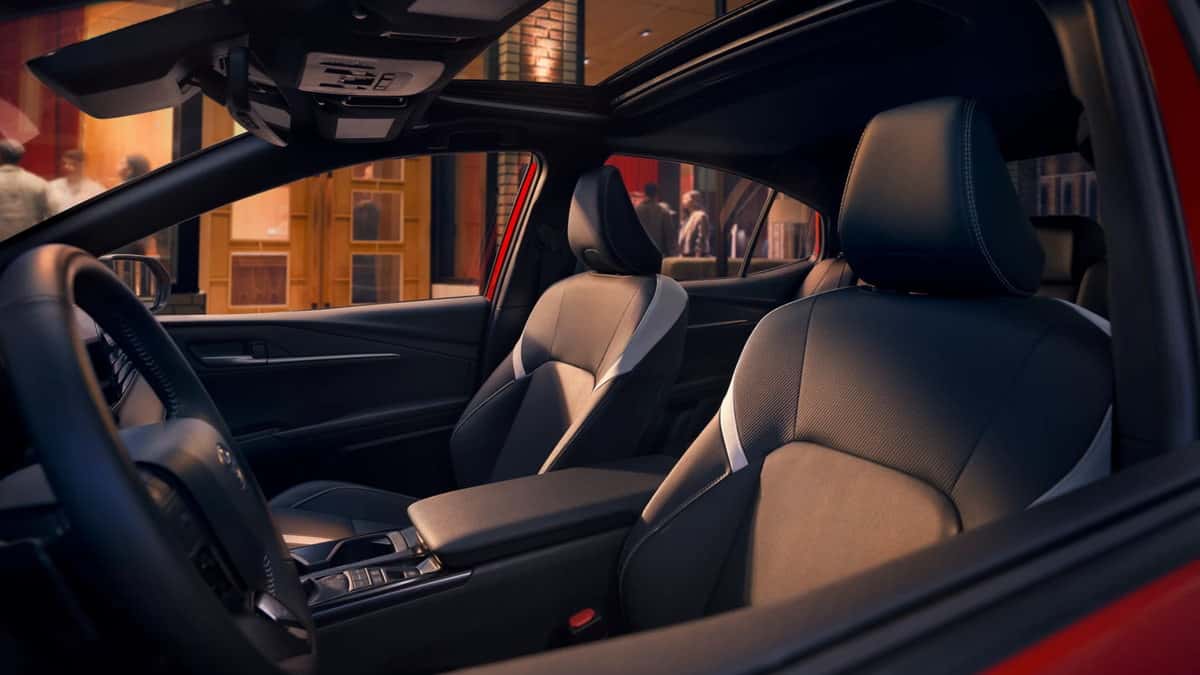
A hybrid only works as a commuter if it works as a car first. The Camry keeps every bit of the midsize sedan packaging it has always had, with the battery tucked under the rear seat rather than eating into the trunk.
Cabin Dimensions and Seating
The Camry seats five and measures 193.5 inches long on a 111.2-inch wheelbase, with roughly 100 cubic feet of passenger volume. Rear-seat riders get 38 inches of legroom, which is genuine adult space rather than the theoretical kind — three across works for a run to Fort Wayne, and rear-facing car seats fit without shoving the front passenger into the dash.
Trunk Space and Storage
Trunk volume is 15.1 cubic feet, identical to what the gas Camry offered, because the hybrid battery lives beneath the rear seat cushion instead of behind it. That swallows a family’s worth of luggage, a stroller plus a grocery run, or four golf bags. Shoppers who want something smaller and cheaper to park often end up reading our Corolla vs. Camry comparison before deciding.
Materials, Noise and Ride Quality
Upper grades add SofTex-trimmed seating with available leather, heated and ventilated front seats, a wireless charging pad, ambient interior lighting and available nine-speaker JBL Premium Audio. Ride tuning is comfort-biased on LE and XLE and firmer on SE, Nightshade and XSE. Because the engine shuts off at stoplights and during light-load cruising, the cabin is noticeably quieter around town than any gas midsize sedan in this price range.
Ownership Costs, Warranty and Hybrid Battery Coverage
The question we field most often is not about horsepower — it is whether a hybrid costs more to keep. Over a typical ownership period with the Camry, the answer is no, and the warranty is a big part of why.
What Toyota Covers
Coverage opens with a 3-year/36,000-mile basic limited warranty and a 5-year/60,000-mile powertrain warranty. Hybrid-related components carry 8 years or 100,000 miles of protection, and the hybrid battery itself is covered for 10 years or 150,000 miles, whichever comes first. That battery term is among the longest in the midsize class and a meaningful reason Camry resale values stay firm.
Routine Maintenance and ToyotaCare
Every new Camry includes ToyotaCare, covering factory-scheduled maintenance for 2 years or 25,000 miles along with 2 years of unlimited-mileage roadside assistance — the full terms are on our ToyotaCare maintenance plan page. Day to day, the service list looks like any other Camry: oil changes, tire rotations, cabin filters. The bonus is brake life, since regenerative braking does much of the slowing and pads and rotors routinely outlast those on a gas-only sedan. When the time comes, you can schedule Toyota service in Warsaw online in about a minute.
Fuel Savings Versus a 32-MPG Midsize Sedan
Run the math on 15,000 miles a year at roughly $3.10 per gallon. A 51-MPG Camry Hybrid burns about 294 gallons, or $912. A comparable 32-MPG gas midsize sedan burns about 469 gallons, or $1,454. That is more than $540 a year, every year, and it widens if your commute is city-heavy or fuel prices climb. Stack on longer brake life and Toyota’s resale reputation and the efficiency pays for itself well inside a normal loan term.
How the 2026 Camry Hybrid Compares to Rival Midsize Sedans
The midsize field has thinned out, but the cars that remain are good. Here is an honest look at where the Camry Hybrid leads and where it does not.
| Vehicle | Best Combined MPG | Combined Horsepower | AWD Available |
|---|---|---|---|
| Toyota Camry Hybrid | 51 MPG | 225–232 hp | Yes (all five grades) |
| Honda Accord Hybrid | 48 MPG | 204 hp | No |
| Hyundai Sonata Hybrid | 51 MPG | 192 hp | No |
| Kia K5 (gas only) | 30 MPG | 191 hp | Yes (GT-Line) |
The Sonata Hybrid matches the Camry’s combined figure and does it with a highway-biased 56-MPG rating, but it gives up 30-plus horsepower and offers no all-wheel drive. The Accord Hybrid drives beautifully and trails by three MPG, also front-drive only. The K5 will sell you all-wheel drive for less, then charge you 20 MPG for the privilege. Only the Camry puts 51 MPG, 232 horsepower and winter traction in the same showroom, which matters more in Indiana than it does in Arizona. If Honda is your other finalist, our Honda Accord vs. Toyota Camry comparison is the next thing to read.
Who the 2026 Camry Hybrid Is Right For
After walking hundreds of shoppers through this car, we have a decent read on who loves it and who should look elsewhere. It is a strong fit if you are:
- A commuter covering 30–80 miles a day on a mix of city streets and US-30
- A high-mileage driver who wants the fuel savings without changing a single habit
- A hybrid-curious buyer with no interest in home charging hardware or public plugs
- A family that needs real rear-seat room and a full-size trunk in one car
- An all-weather driver who wants all-wheel drive without dropping to 30 MPG
- A retiree or downsizer stepping out of a three-row SUV into something cheaper to run
- A rideshare or delivery driver, where every MPG lands directly in your take-home pay
If you regularly haul more than five people, tow a trailer or need real ground clearance, a crossover is the smarter purchase — start with our 2026 Toyota RAV4 specs and then read how to choose between a hybrid and a traditional SUV before you commit either way.
Explore More Toyota Hybrid Resources
Still comparing? Browse the full Toyota electrified vehicle lineup, see why shoppers count us among the best car dealerships in northern Indiana, or get a no-obligation number with our value your trade tool before you drive over.
Ready to Drive the 2026 Camry Hybrid?
Visit Toyota of Warsaw at 448 W 250 N, Warsaw, IN 46582, or call (574) 267-4636 to book a test drive. Our product specialists will help you weigh LE efficiency against XSE styling, decide whether all-wheel drive earns its $1,525 on your commute, and handle financing start to finish.